

Making insurance fit into the car sale.
In a dealership's everyday work, insurance competes for attention with negotiation, financing, paperwork and vehicle delivery. To take part in this process, salespeople needed to be able to refer a customer and understand what happened afterward: the negotiation's progress, its completion and the return on their referral.
I worked on building Conexão Conseg, connecting this experience across WhatsApp, web and mobile. My work spanned research, facilitation, naming, flows, UX/UI, UX writing, prototyping and gamification, in collaboration with Product, IT, Business Intelligence and external partners.
The project started with the work already happening in dealerships. Decisions about channels, content and interface came from that understanding: a quick entry point for people making referrals and appropriate visibility for those following up or managing them.
My contribution: turning the needs of different people in the operation into a continuous experience, from referral to return.
A referral was only the beginning. Its outcome also needed to be visible.
Wiz Conseg distributes insurance and financial products through dealerships. In this setting, selling a car requires attention across several stages, while an insurance referral depends on collaboration between dealership staff and the service operation.
The project materials showed manual processes and limited visibility into referral progress. Salespeople needed to know whether customers had been contacted and how their participation related to the incentive. Managers needed to understand team performance, conversions and opportunities at each dealership.
The question guiding the work was how to fit insurance into this routine with less effort and greater transparency. Making data submission easier addressed part of the task; the product also needed to provide a path for follow-up.
The challenge had two connected areas: making referrals feasible during the sale and sustaining the relationship afterward.
Before choosing the channel, I investigated the salesperson's work.
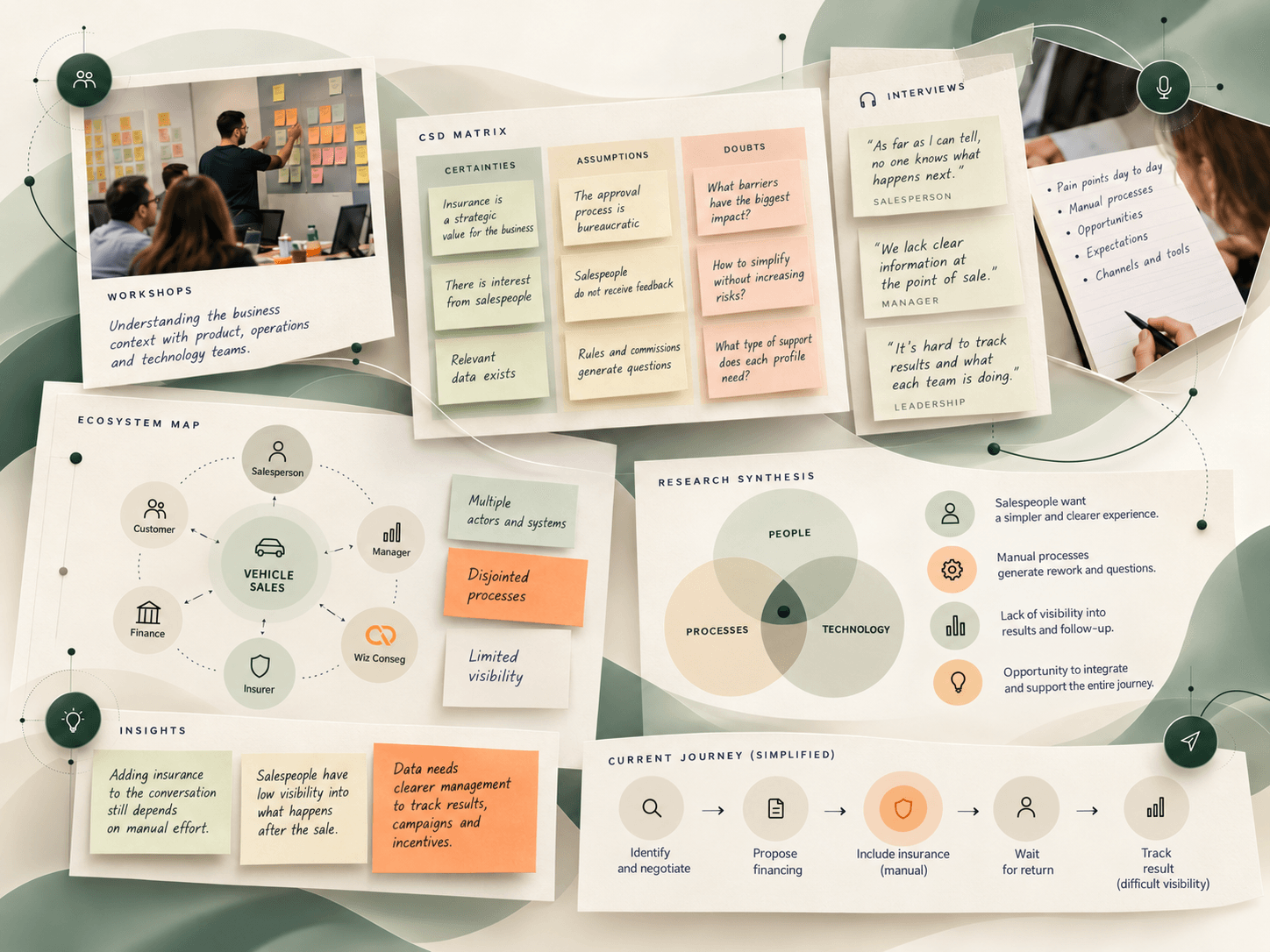
We began by understanding the business and organizing certainties, assumptions and questions in a CSD matrix. The qualitative research involved salespeople, dealership managers and brand managers to understand how insurance related to their tasks.
The interview guide explored process duration, system use, knowledge of insurance, commissions, points programs and cashback. These questions brought the discussion closer to operations: how much effort a referral required, what motivated participation and how people followed the outcome.
The findings recorded in the case pointed to manual tracking, limited knowledge of insurance and uncertainty about benefits. Financial commission mattered for engagement. This informed two priorities: simplifying referral entry and making its conditions and subsequent steps understandable.
Research changed the design question: beyond how to make a referral, we needed to understand why someone would keep participating.
Insurance needed to enter the conversation at the right moment.
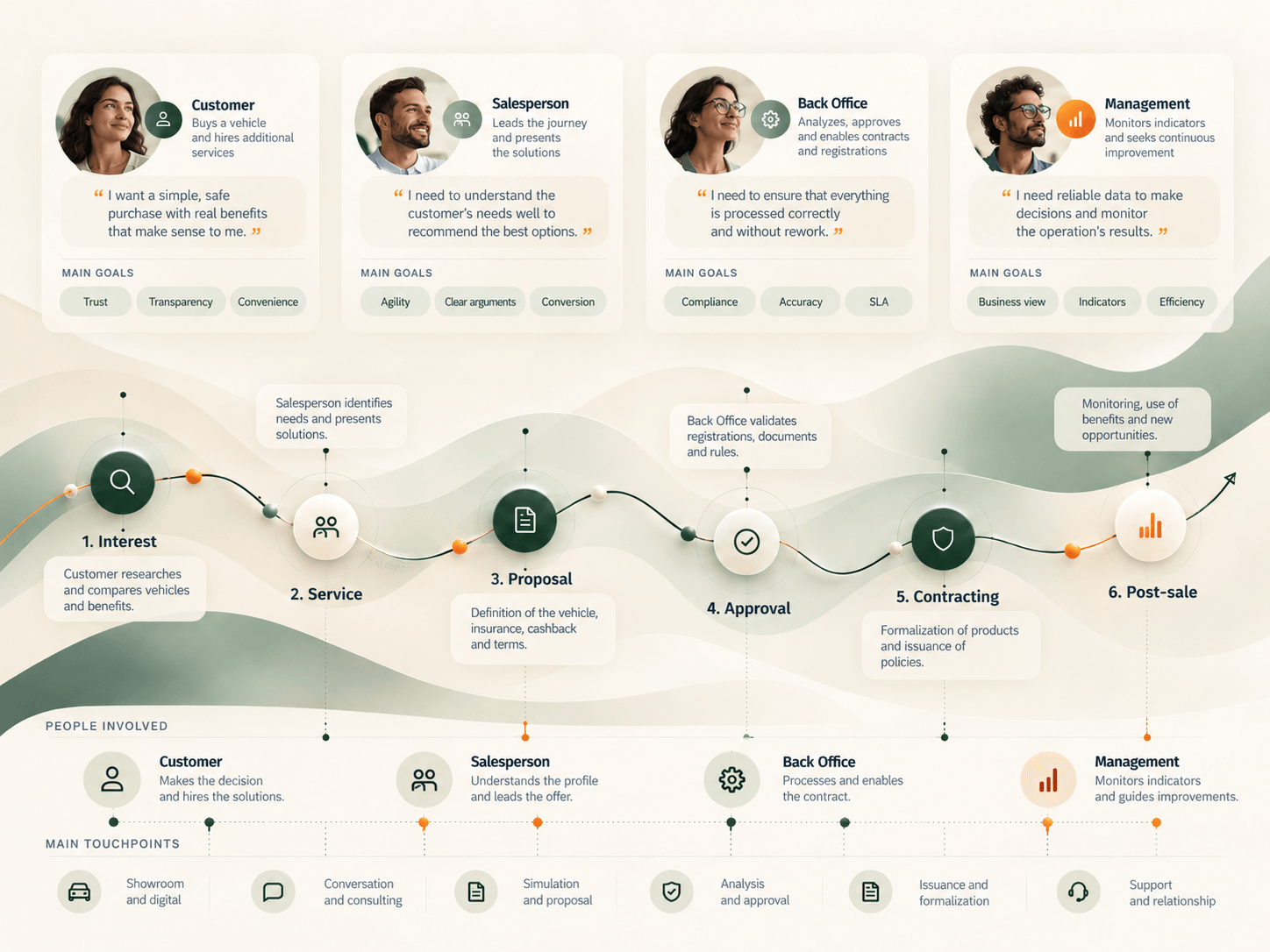
We mapped the vehicle sale journey from reception to delivery. The record detailed the work across the test drive, negotiation, financing, insurance, invoicing and signatures. This let us see insurance within a sequence that already consumed time and attention.
Journey opportunities
The map revealed opportunities at different moments: using initial registration for a preliminary quote, bringing the insurance price into negotiation and connecting the offer with financing. These possibilities helped identify where the experience could support salespeople and which interruptions it should avoid.
Responsibilities by profile
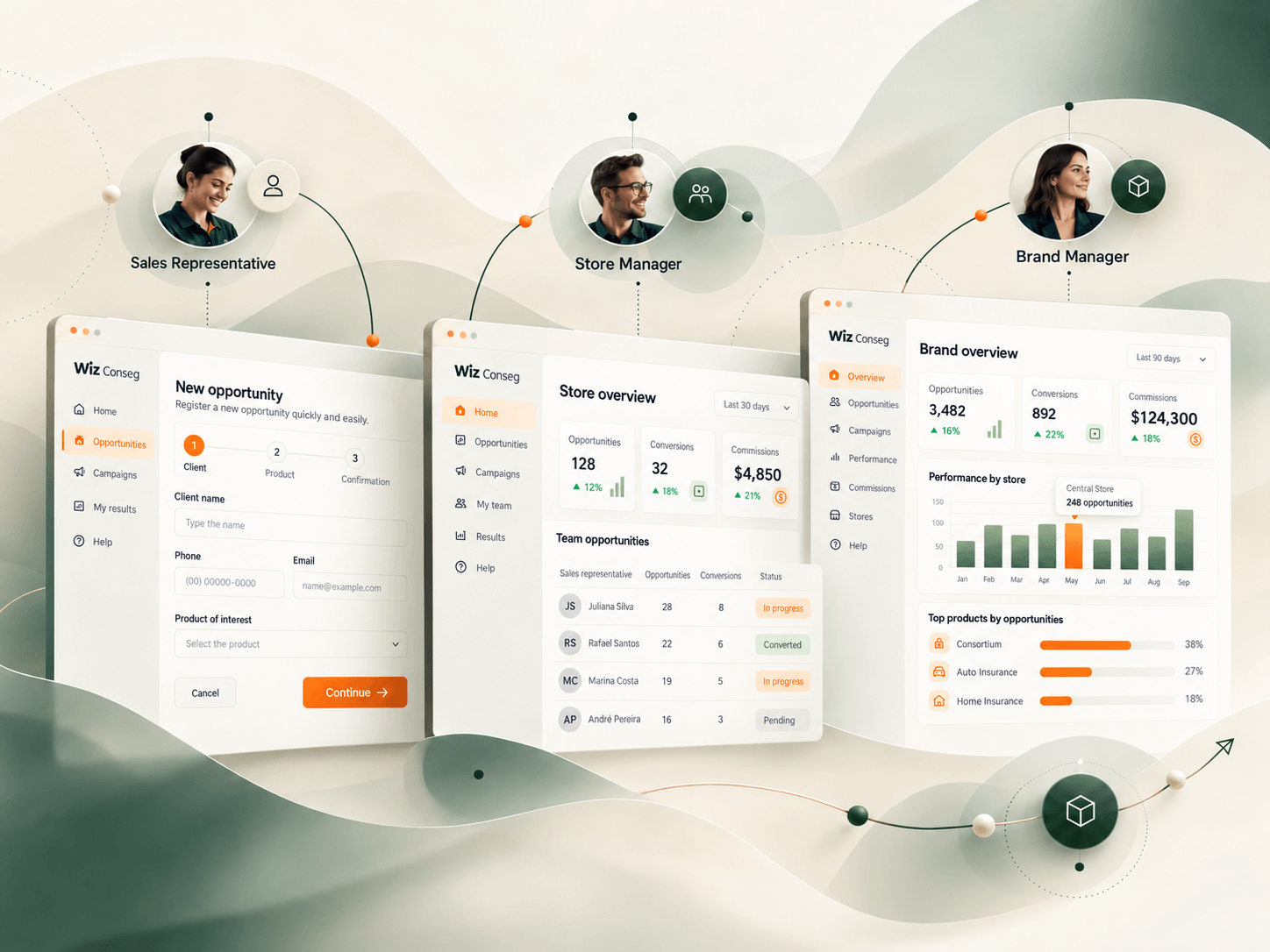
Our understanding of the people also distinguished responsibilities. Salespeople needed speed and feedback on their referrals. Dealership managers tracked their teams; brand managers needed a consolidated view. These differences began to guide interface content and hierarchy.
The journey gave the flow context: the product needed to help operations move forward while the customer was still negotiating the car purchase.
The referral began where the conversation was already happening.
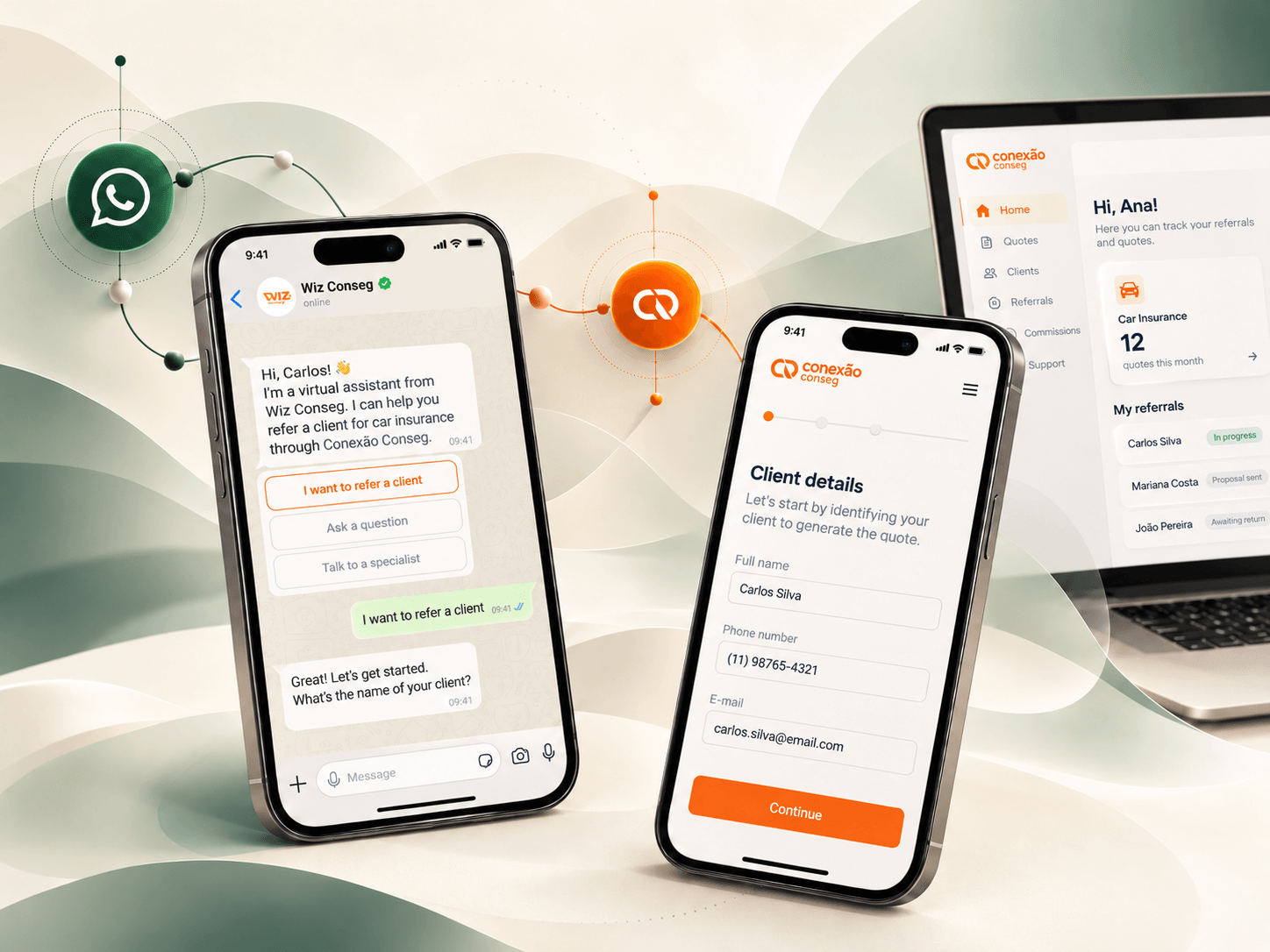
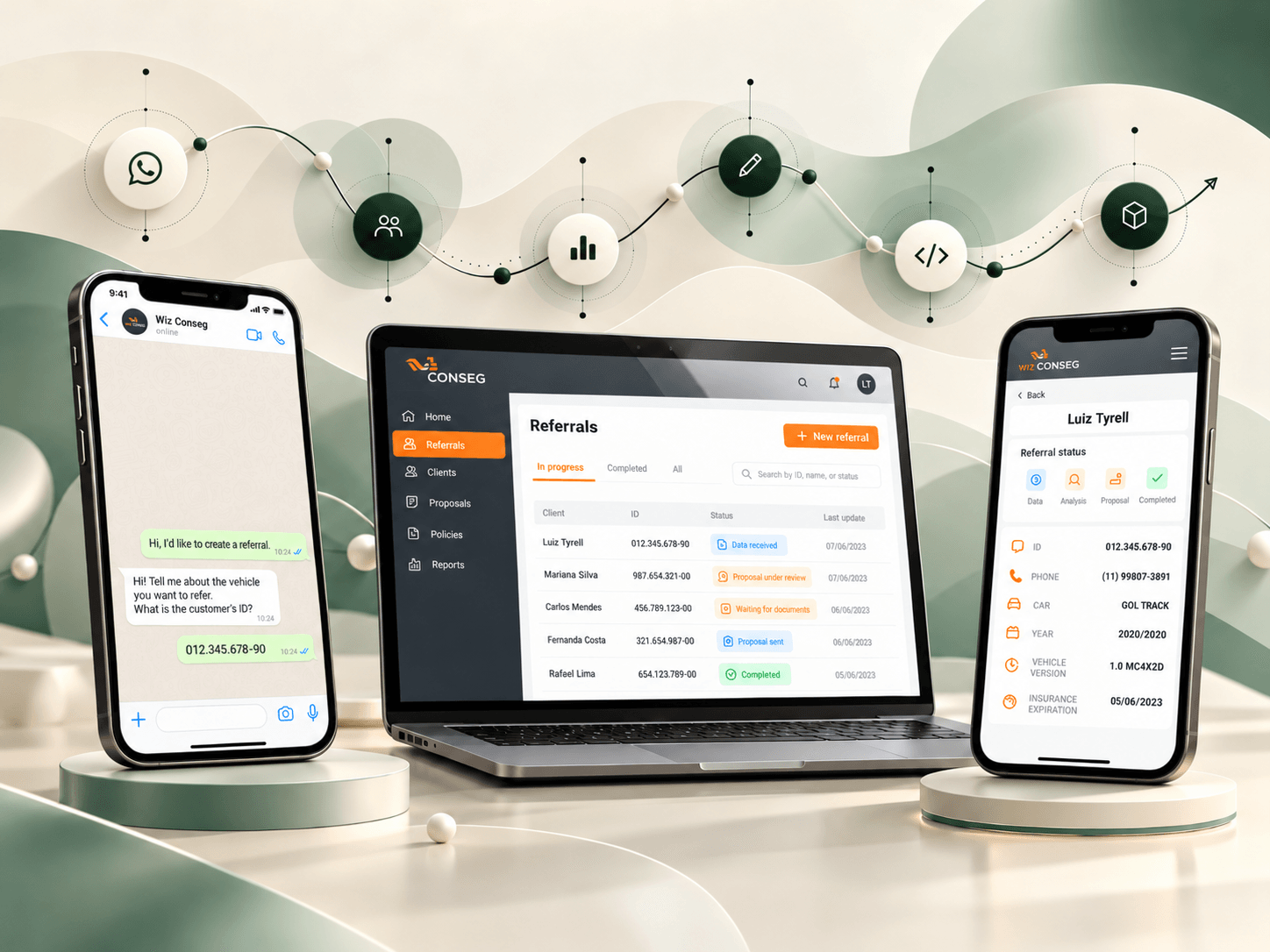
WhatsApp was already part of dealership work. That familiarity informed the choice of channel for starting a referral: salespeople could contact the service team without first learning a new environment.
The Wauto virtual assistant was developed in collaboration with technology and partners, including IBM. The flow supported collection of the necessary information and its routing to operations. The platform complemented this start with status checks and follow-up.
This distribution also appears in a Wiz institutional publication from December 2020: salespeople made referrals using a name, phone number and CPF, while Conexão Conseg brought together reports, status, incentives and training.
The channel choice was tied to the task: starting with a familiar conversation and providing a dedicated structure to follow what happened next.
Conexão Conseg: a name for an ongoing relationship.
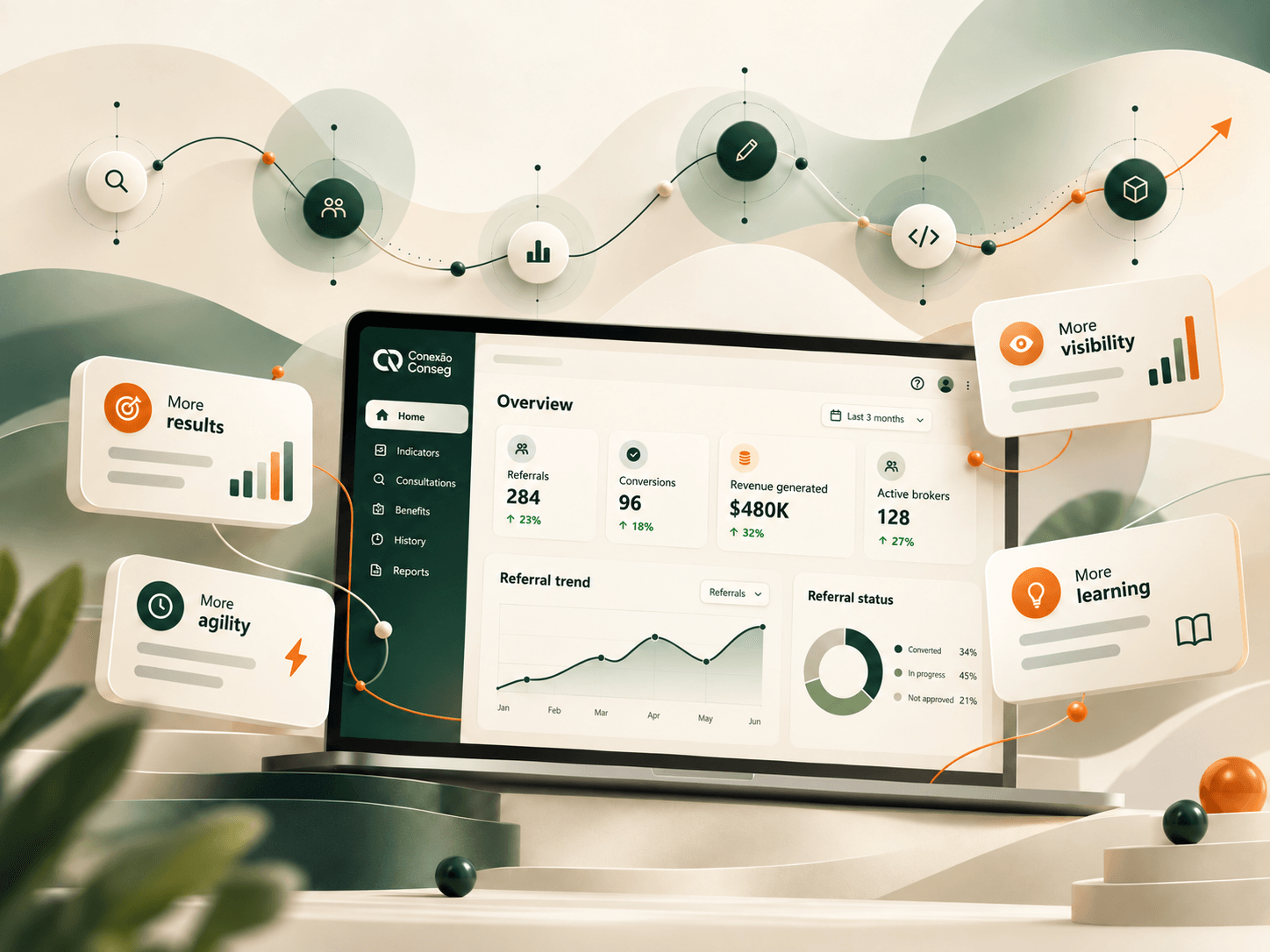
I led a naming workshop that resulted in Conexão Conseg. The name expressed the idea of bringing people, information and opportunities together, giving an identity to the environment that continued the experience begun with a referral.
I organized the interfaces around each profile's questions. For salespeople: what did I refer, what stage is it at and what is my incentive? For dealership managers: how is the team performing and where are the opportunities? For brand managers: what do consolidated results reveal about dealerships and campaigns?
Registration and acceptance of terms, referral history, campaigns, bonuses and benefits formed the experience. In management views, dashboards and indicators supported a broader understanding of operations. Collaboration with Product, IT and BI connected these needs with the information available and implementation feasibility.
The difference between the views was functional: each needed to support the decisions of the person consulting the product.
After making a referral, salespeople needed an answer.
Make progress visible
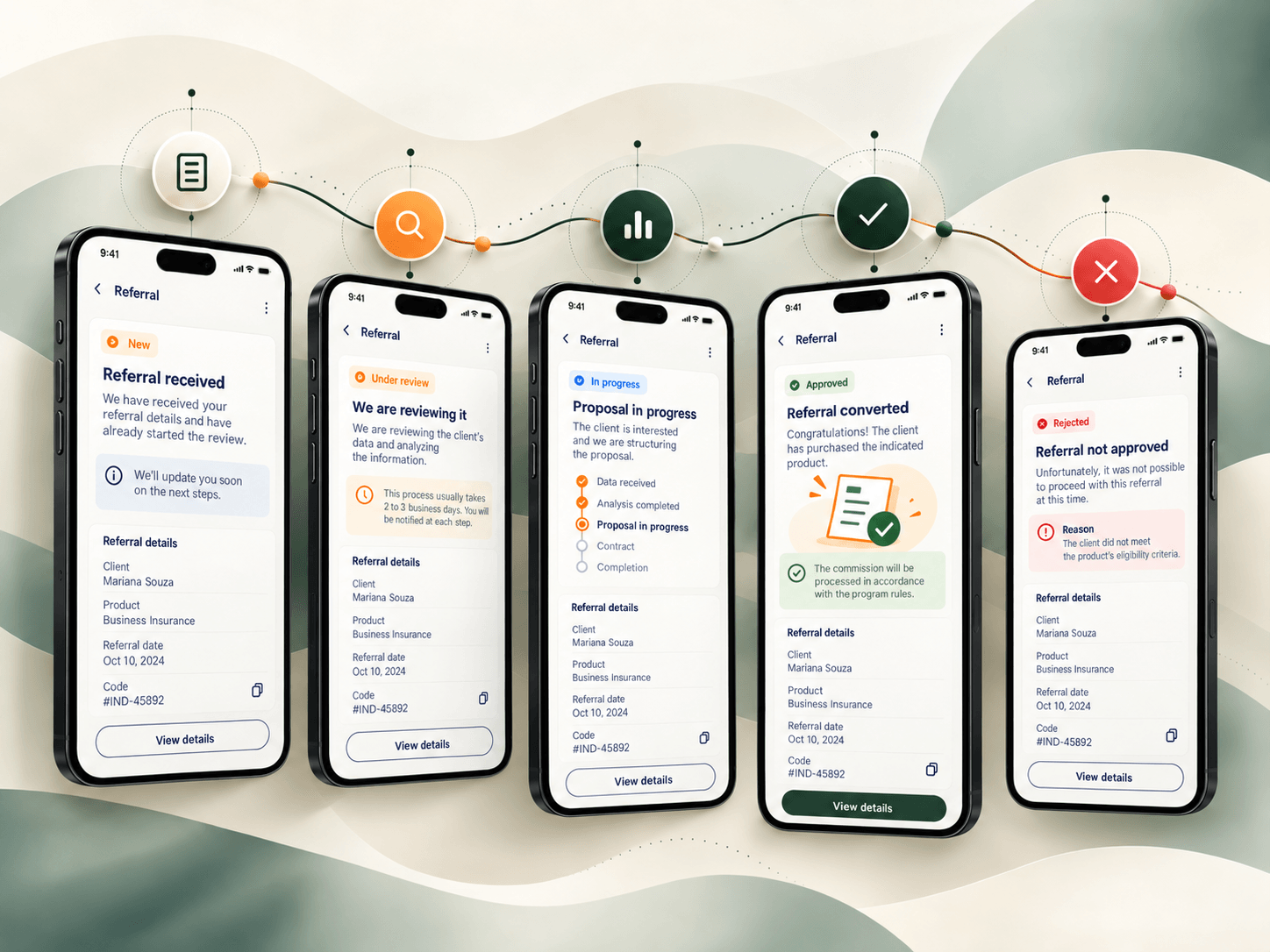
The tracking screens show how we worked on task continuity. A referral could appear as new, in progress, accepted or declined. Each state came with an explanation of what was happening.
Messages throughout the task
At the start, the message confirmed receipt and explained that advisers would make contact. During negotiation, it explained that service was underway. A successful conclusion connected the completed insurance sale with the incentive being credited; a declined outcome provided a way to check the reason.
Operational clarity
UX writing had an operational purpose: translating the referral's situation for the person who initiated it. Icons, labels and messages worked together so salespeople could understand both the stage and its consequence.
Transparency became tangible in these details: a referral stopped being merely submitted data and gained progress that people could check.
The dashboard was available. People still needed help reading it.
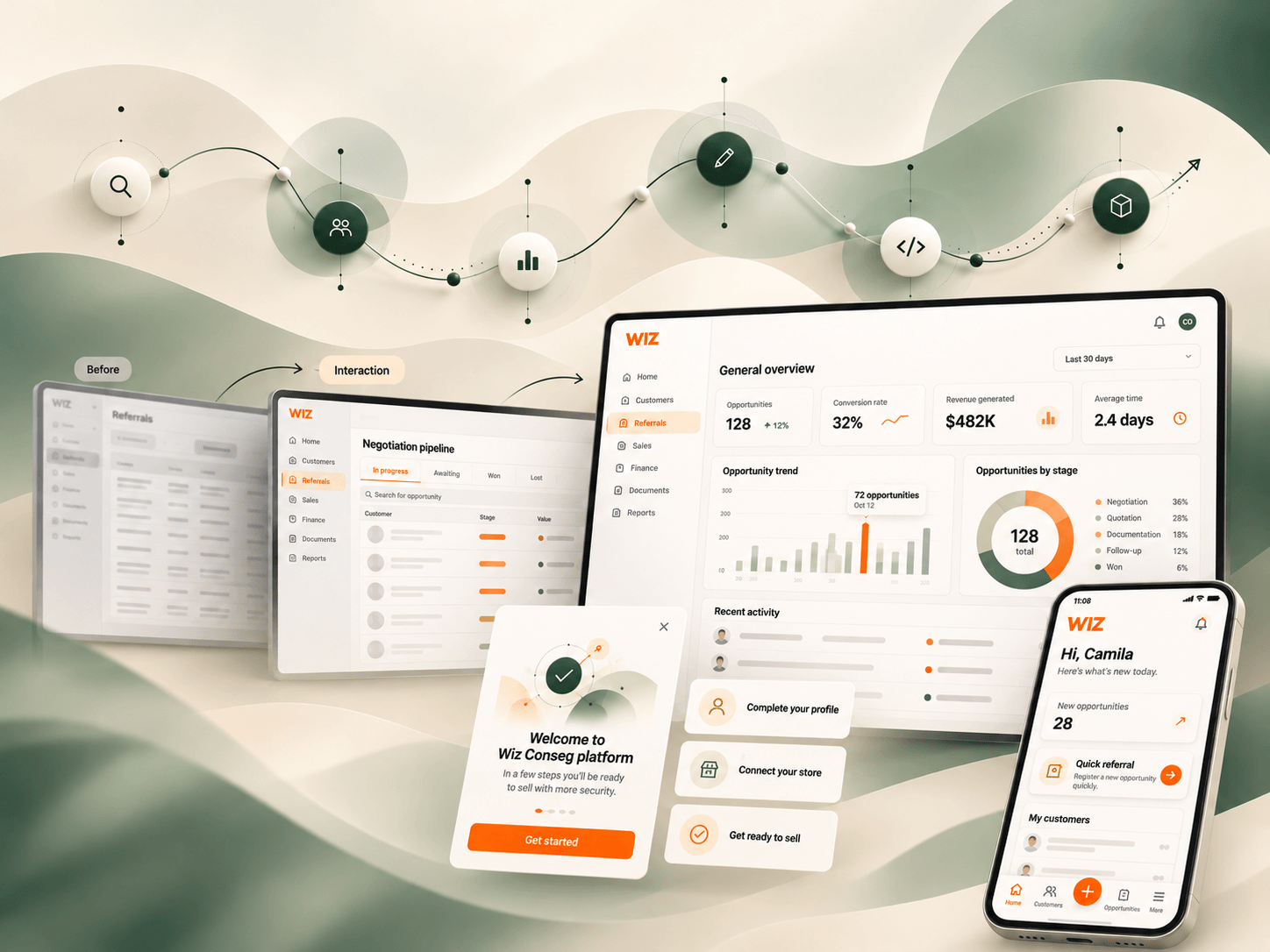
Tests revealed difficulties understanding the dashboard. This led to the addition of step-by-step onboarding that put the interface and its features in context. It was a change directly tied to observed use: presenting information did not guarantee that people knew how to begin.
I worked on evolving the UI with attention to inputs, hierarchy and data visualization. For people unfamiliar with the environment, the entry needed to explain the path; for returning users, tasks and indicators needed to be easy to locate.
After the web version, the experience evolved to mobile. Tests, feedback and usage analysis supported iterations. The adaptation considered data entry on phones and reading information in a smaller space, preserving the connection between referring, checking and following up.
This was a decisive point in the process: a difficulty observed during testing became guidance incorporated into the product.
To motivate participation, the benefit needed to make sense.
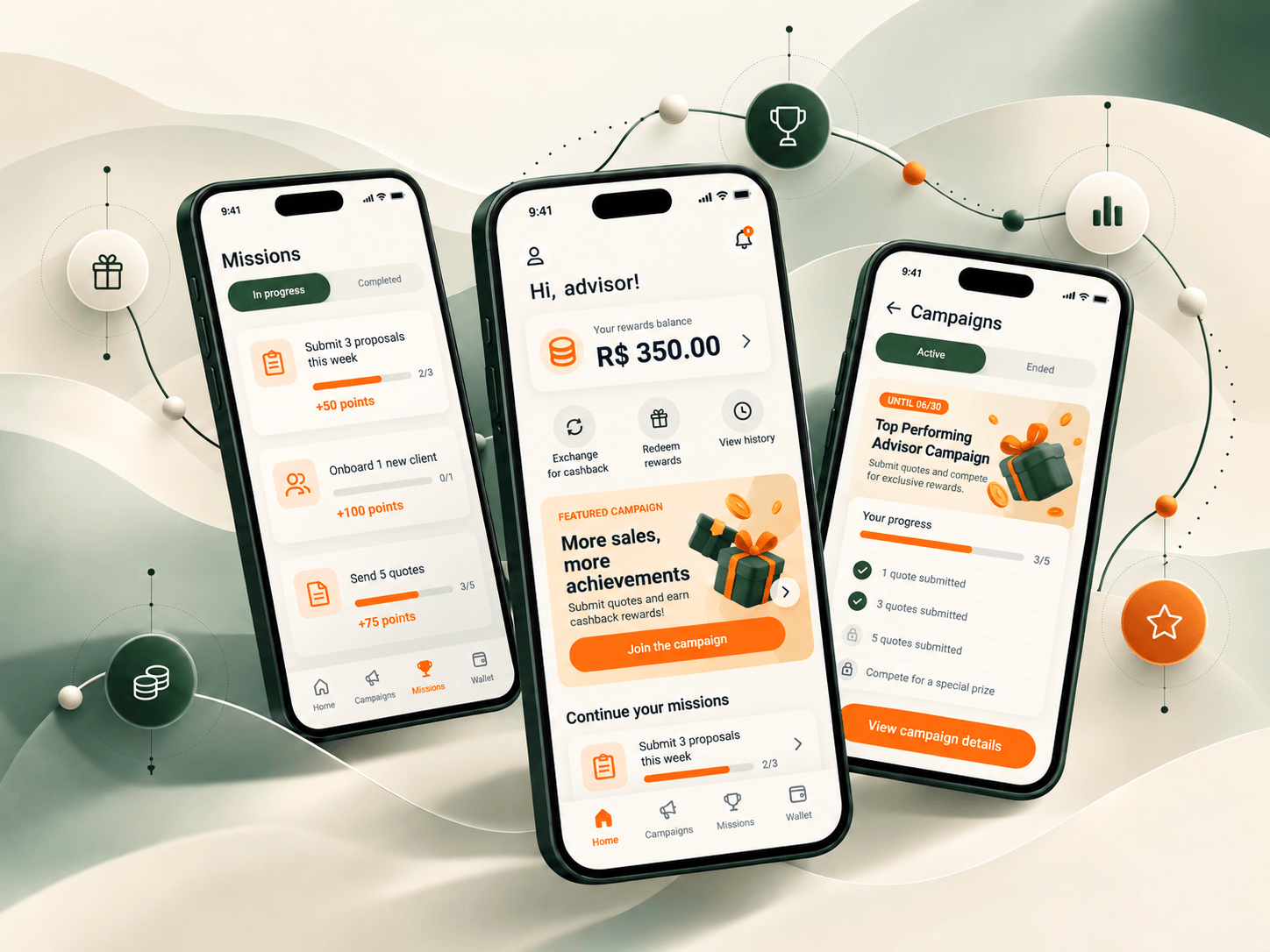
Research had shown the importance of cash commission and uncertainty about cashback. The engagement experience therefore needed to explain participation conditions and the relationship between a referral, its completion and the benefit presented.
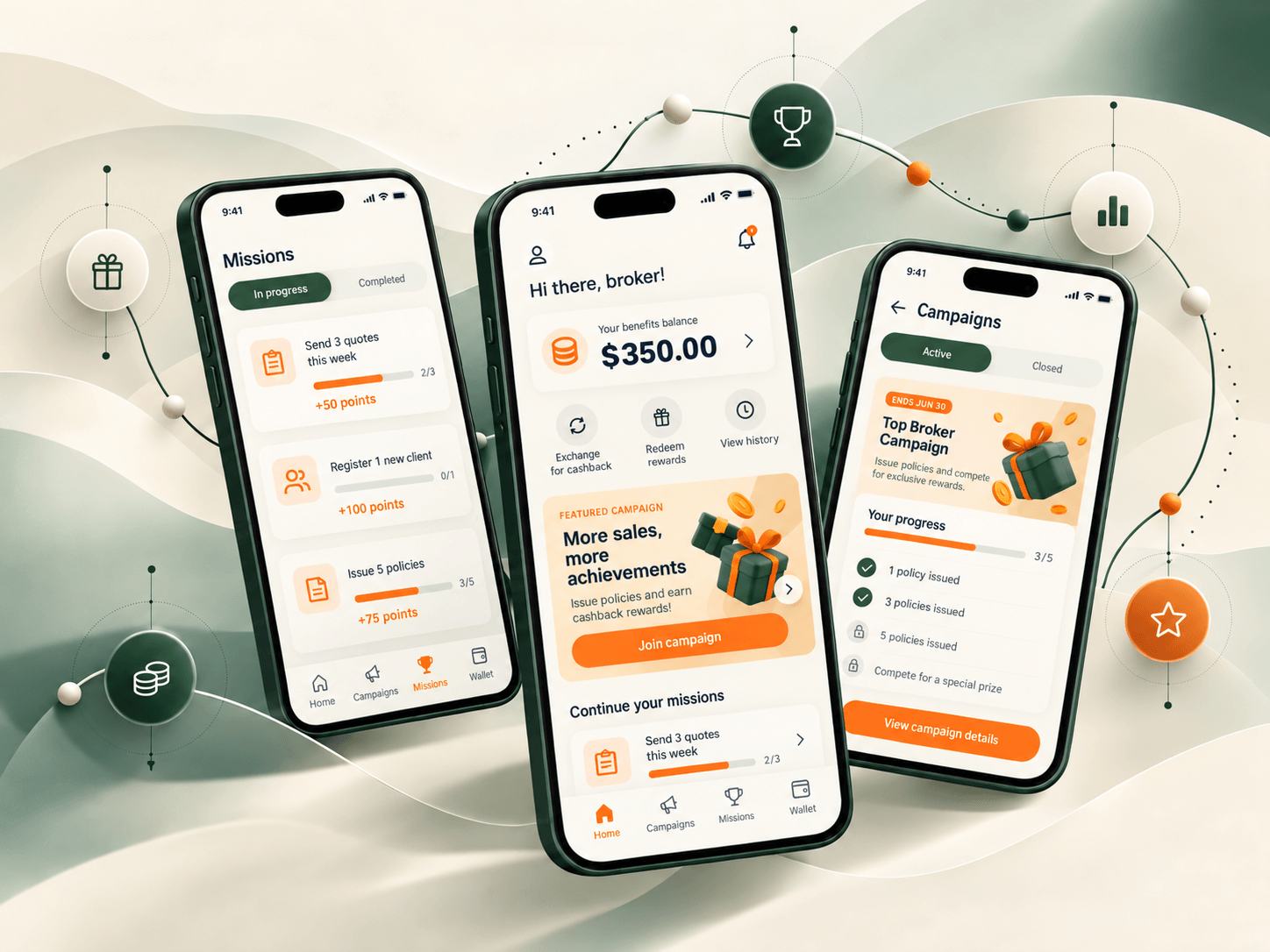
I worked on campaigns, incentives and missions connected to follow-up. Bonuses, cashback and Conta W were part of the environment and needed to be understandable. The interface brought together what people could do and the information needed to understand their return.
Gamification became part of this relationship between action, progress and recognition. The focus was to make rules and participation visible while respecting the commercial routine and the financial motivation identified in research.
The incentive needed to be understandable: knowing what to do, following progress and recognizing how effort related to the return.
A distributed experience with continuity between tasks.
The project connected referrals, status checks and management. WhatsApp supported entry; the platform organized follow-up; profile-specific views brought data closer to the responsibilities of salespeople and managers.
This experience was built through related decisions. Research revealed operational effort and limited visibility. The journey showed where to introduce insurance. Profiles guided content. States explained what followed a referral. Tests brought onboarding and supported interface evolution.
My work spanned these stages, from research and facilitation to naming, flows and interaction detail. I worked with Product, IT, BI, stakeholders and external partners to connect experience proposals with operations.
The delivery addressed the whole relationship: starting a referral, understanding its progress and following its effects within dealership work.
Speed to refer. Visibility to continue.
reported reduction in operational time to refer insurance
The original case records a reported 40% reduction in the salesperson's operational time to refer insurance. The result relates to that task. The delivery also made progress visible and brought campaigns, incentives and management views into the follow-up environment.
to receive an auto insurance quote
In the process described by Wiz in December 2020. The publication connects data submission with the WhatsApp-integrated tool. This is an operational service time, different from the time a salesperson spends making a referral.
Wiz Conseg gross revenue growth
In the first half of 2021 compared with the same period in 2020. The institutional publication connects the strategy with in-person commercial work, Wauto and Conexão Conseg. This is a business-unit result, with contributions from several areas.
What this project consolidated in my practice
Field research, the choice of a familiar channel and the questions observed during testing showed how decisions at different scales connect. The product became stronger by supporting work already taking place: starting with little effort, explaining progress and making the return visible. This relationship between context, task and clarity came to guide how I design experiences.